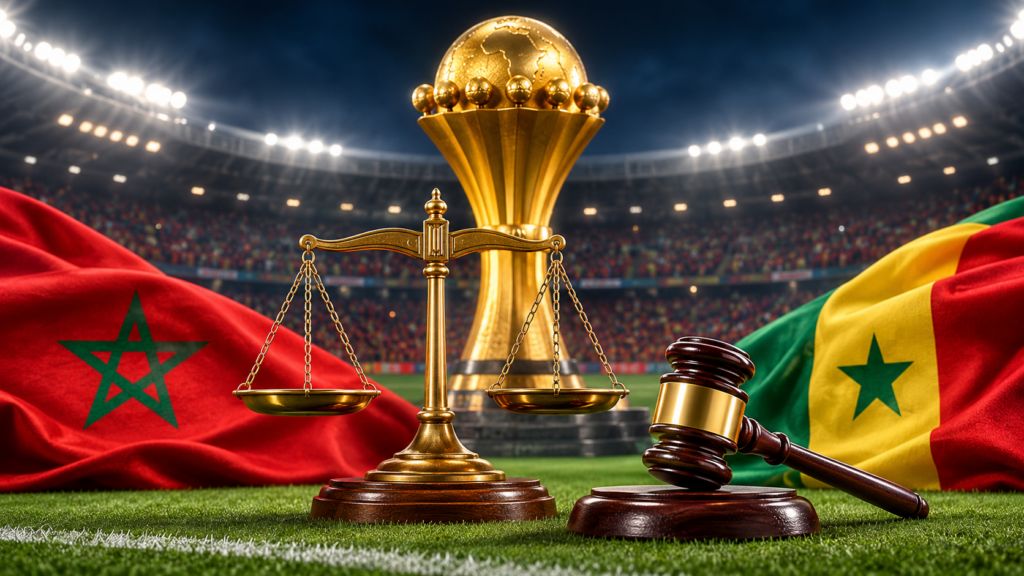
The Court of Arbitration for Sport (CAS) has ruled in favour of Senegal in the dispute over the 2025 Africa Cup of Nations final, restoring the Teranga Lions as African champions and overturning the Confederation of African Football (CAF) Appeal Board decision that had awarded Morocco a 3-0 victory by forfeit. The ruling, delivered on Tuesday, 24 November 2026, brings a dramatic legal chapter in the Morocco-Senegal AFCON 2025 controversy to a decisive point.
Senegal had originally won the final 1-0 after extra time in Rabat on 18 January 2026. CAF later changed the official result to 3-0 in Morocco’s favour after ruling that Senegal had forfeited the match when players left the pitch during a protest late in normal time. Senegal appealed that decision to CAS, which has now set aside CAF’s ruling and reinstated Senegal’s title.
CAS overturns CAF’s 3-0 decision and restores Senegal’s title
The central outcome is clear: Senegal are recognised as the winners of AFCON 2025, while the CAF Appeal Board decision that recorded a 3-0 forfeit victory for Morocco has been overturned. The decision restores the sporting result achieved on the pitch in the final, when Senegal defeated the host nation 1-0 after extra time.
The ruling follows an appeal lodged by the Senegalese Football Federation (FSF) against CAF and the Royal Moroccan Football Federation (FRMF). CAS had confirmed receipt of that appeal on 25 March 2026. Senegal asked the sports tribunal to set aside CAF’s decision and declare the FSF the winner of the tournament. The case was heard by a CAS panel in Lausanne on 8 October before the court issued its award on 24 November.
Why CAF had awarded Morocco a 3-0 victory
The dispute began with the closing stages of the AFCON 2025 final, played at the Prince Moulay Abdellah Stadium in Rabat on 18 January. With the score still 0-0 late in normal time, Morocco were awarded a penalty following a VAR review. Senegalese players protested and temporarily left the field, causing a lengthy interruption.
Play eventually resumed after the referee allowed the teams to continue. Morocco’s Brahim Díaz took the penalty but did not score, and the match went into extra time. Senegal then found the decisive goal through Pape Gueye, securing a 1-0 victory on the field.
On 17 March 2026, CAF’s Appeal Board ruled that Senegal had forfeited the final under Article 84 of the AFCON regulations. It recorded the match as a 3-0 win for Morocco. That decision changed the official tournament outcome and led Senegal to take the case to CAS.
The referee’s authority was central to the CAS ruling
According to Reuters’ report on the CAS decision, the tribunal’s reasoning focused on the referee’s authority and the fact that the match was allowed to resume and reach its conclusion. CAS found that referee Jean-Jacques Ndala had committed no error of law by allowing play to restart after the interruption.
The distinction is important. The case was not simply about whether Senegalese players had left the pitch during the protest. It concerned the legal effect of that incident after the referee permitted the match to continue. The final was completed, both teams resumed playing, and Senegal won 1-0 after extra time. CAS’s ruling therefore reasserts the importance of the referee’s authority over the conduct and continuation of a match.
What the decision means for Morocco and Senegal
For Senegal, the decision restores the title they had celebrated after the final in January. The Teranga Lions are once again recognised as AFCON 2025 champions, with the 1-0 result against Morocco standing as the decisive match result.
For Morocco, the ruling overturns the title awarded through CAF’s Appeal Board decision. The Royal Moroccan Football Federation was a party to the CAS proceedings, alongside CAF and the Senegalese federation. The outcome is therefore a major setback for Morocco’s appeal at continental level, although the CAS award settles the sporting arbitration dispute described in this case.
It is important to keep the sequence of decisions clear: Senegal won 1-0 on the pitch on 18 January; CAF’s Appeal Board changed the result to 3-0 for Morocco on 17 March; Senegal appealed on 25 March; and CAS ruled in Senegal’s favour on 24 November. These are separate stages of the same case, not different versions of the match itself.
How the AFCON 2025 case reached Lausanne
After CAF announced its Appeal Board decision, the Senegalese Football Federation challenged it before the Court of Arbitration for Sport in Switzerland. The appeal named CAF and the FRMF as respondents and sought the annulment of the decision that declared Senegal to have forfeited the final.
The parties presented their arguments at a hearing in Lausanne on 8 October 2026. CAS later said it would issue a complete award setting out the legal grounds rather than provide only a short announcement. The final ruling on 24 November has now resolved the central question over the AFCON 2025 title.
Lions12 coverage and the official record
Lions12 previously explained the background to the case in its report on the CAS decision timetable for the Morocco-Senegal AFCON 2025 appeal. Readers can also follow our Atlas Lions coverage hub for news and updates involving the Moroccan national team.
For the official record, readers should consult the Court of Arbitration for Sport and CAF documents, alongside established news reporting on the published outcome. The original CAS notice confirms the registration and scope of Senegal’s appeal, while CAF’s own statement records the March decision that CAS has now overturned.
Sources and documents
- Reuters: CAS ruling in favour of Senegal reasserts that the referee’s decision is final, 24 November 2026.
- CAF: Appeal Board media statement, 17 March 2026.
- CAS: Registration of the Senegalese Football Federation’s appeal, 25 March 2026.
Editorial note: This report distinguishes the result on the pitch, CAF’s subsequent administrative decision and the later CAS ruling. It reflects reporting available on 24 November 2026.